




Gymnastics Rehabilitation
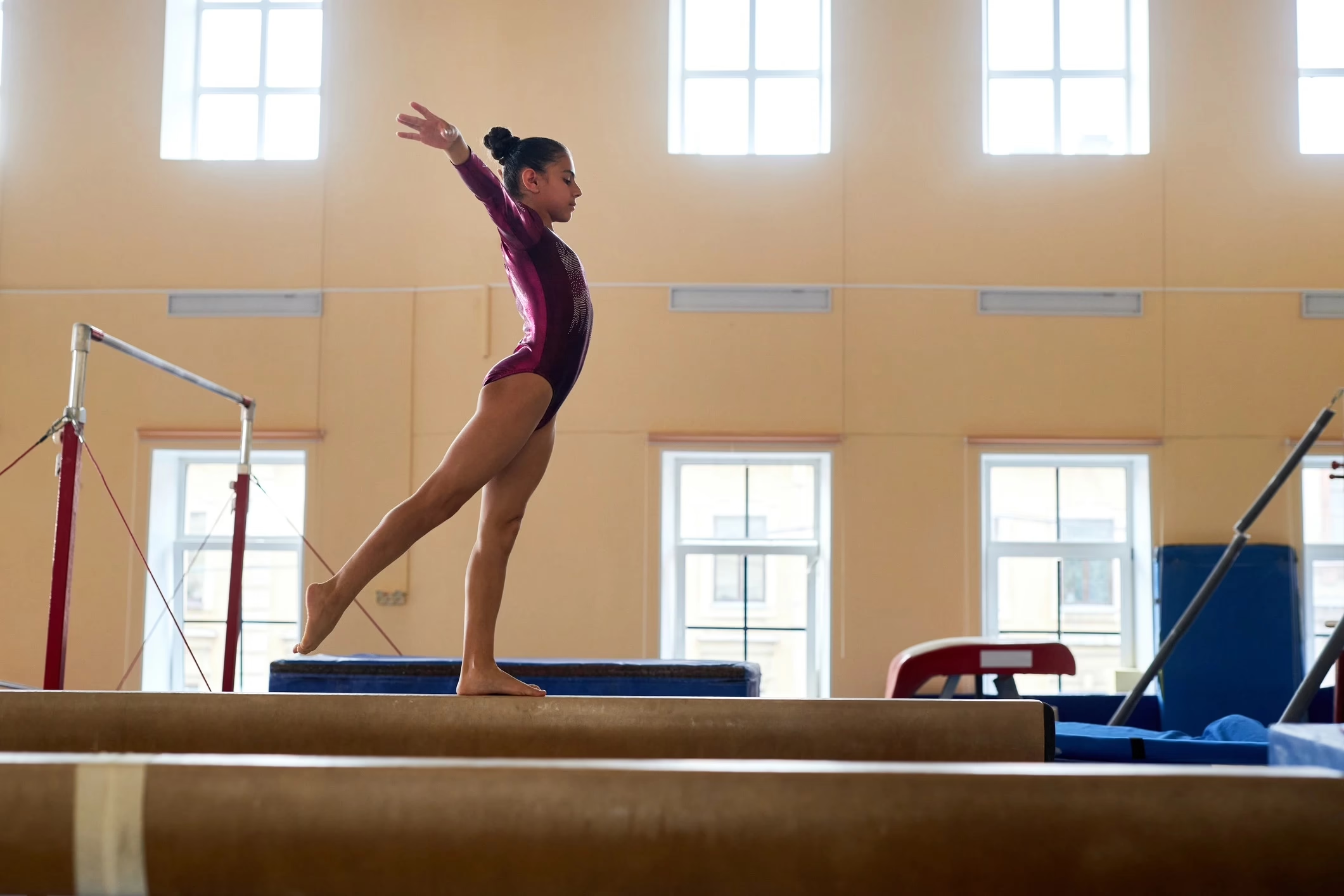
Gymnastics demands more from the human body than almost any other sport. The combination of extreme flexibility, explosive power, repetitive impact, and early specialization creates a unique set of physical challenges that most physical therapists have never experienced firsthand.
At Greendale Physical Therapy in Auburn, we have.
Auburn is Greendale’s Center for Gymnastics Rehabilitation in Central Massachusetts.
Our gymnastics rehabilitation team includes therapists who have been high-level and collegiate gymnasts themselves, giving them a unique understanding of both the physical demands and the psychology required to safely and confidently return athletes to their sport. One of our therapists is a former Level 10 competitive gymnast, and another holds specialized certifications in treating gymnasts.
We understand the sport from the inside – the training demands, the pressure to push through pain, and what it truly takes to return to the gym with confidence. Whether you are a recreational gymnast or a high-level competitor, you are in the right hands.
Call us today at 855-459-5000 or request an appointment online.
WE HELP WITH ALL TYPES OF GYMNASTICS INJURIES
Gymnastics places extraordinary stress on developing bodies, and injuries can happen at every level. Our team treats the full range of gymnastics-related conditions, including:
- Wrist sprains, fractures, and growth plate injuries
- Ankle sprains and instability
- Knee pain and ACL injuries
- Lower back pain including spondylolysis and spondylolisthesis
- Shoulder impingement and rotator cuff injuries
- Hip flexor strains and labral tears
- Achilles tendon injuries
- Elbow stress injuries from repeated weight-bearing
- Foot and toe injuries
- Concussions from falls and dismounts
- Muscle strains and sprains from twisting and landing
- Repetitive stress injuries from high-volume training
Gymnastics injuries often stem from a combination of early sport specialization, long training hours, insufficient recovery time, muscle imbalances, and the extreme range of motion the sport demands. Left untreated, many of these injuries worsen over time. The right physical therapy program addresses both the injury and the underlying factors that caused it – so you can return to the gym and stay there.
WHY GREENDALE IS DIFFERENT
Most physical therapists treat gymnasts. Very few have been one.
Our therapists have been high-level and collegiate gymnasts themselves, giving them a unique understanding of both the physical demands and the psychology required to safely and confidently return athletes to their sport. One of our team members is a former Level 10 competitive gymnast. Another competed as a collegiate gymnast. A third holds specialized certifications in gymnastics rehabilitation.
This combination of lived experience and clinical expertise means we speak your language. We know what a back walkover demands from the body, what is at stake when an athlete needs to return to training for an upcoming meet, and how to navigate the mental side of injury recovery that so many athletes struggle with. We treat gymnasts the way gymnasts deserve to be treated – with precision, respect for the sport, and a genuine commitment to getting you back to full performance.
OUR APPROACH TO GYMNASTICS REHABILITATION
Every gymnast who walks through our door receives a thorough evaluation before any treatment begins. We assess the injury, identify contributing factors such as muscle imbalances or movement pattern issues, and build a personalized program designed around your goals and your timeline.
Our gymnastics rehabilitation programs include:
- Manual therapy – hands-on treatment to reduce pain, restore joint mobility, and improve tissue quality
- Targeted strengthening – building strength in the wrists, hips, knees, ankles, and shoulders to reduce stress on vulnerable joints
- Core strengthening – gymnasts are highly mobile in the lumbar spine, making core stability essential for injury prevention and recovery
- Flexibility and range of motion work – restoring and maintaining the mobility the sport demands without compromising joint stability
- Dry needling – releasing trigger points and reducing pain in overworked muscle groups
- Kinesiotaping – providing joint support without restricting the range of motion gymnasts need to train and compete
- Jumping and landing mechanics – correcting technique to reduce impact forces and protect the knees, ankles, and spine
- Return-to-sport progression – a structured, phased program that ensures you are ready to return to training safely before you do
- Injury prevention screening – identifying risk factors before they become injuries, particularly important for young and developing gymnasts
Request an Appointment


COMMON CONDITIONS WE TREAT
Wrist Injuries
Wrist pain is one of the most common complaints among gymnasts due to the repeated weight-bearing demands of the sport. We treat wrist sprains, stress fractures, growth plate injuries, and chronic wrist pain using manual therapy, strengthening, and sport-specific rehabilitation protocols.
Lower Back Pain, Spondylolysis, and Spondylolisthesis
Repetitive spinal extension from back walkovers, dismounts, and tumbling can lead to stress fractures, spondylolysis, and spondylolisthesis – a condition where a vertebra slides forward on the one below it. These are among the most common serious injuries in gymnastics and require careful, specialized management. Our therapists are experienced in treating these conditions and returning athletes to the sport safely.
Ankle Sprains and Instability
The beam, floor, and vault all place significant demands on the ankle. We treat acute sprains and chronic instability with a focus on restoring full range of motion, building strength, and correcting landing mechanics to prevent recurrence.
Shoulder Injuries
Uneven bars, rings, and repeated overhead loading create significant shoulder stress. We treat shoulder impingement, rotator cuff strains, and instability with a combination of manual therapy, strengthening, and sport-specific movement correction.
Knee Pain and ACL Injuries
Landing forces in gymnastics place enormous stress on the knee. We treat patellofemoral pain, ACL injuries, and other knee conditions with evidence-based rehabilitation protocols designed to restore full function and prepare gymnasts for the demands of the sport.
Growth Plate Injuries
Young gymnasts are particularly vulnerable to growth plate stress injuries due to early specialization and high training volumes. Our therapists understand the special considerations involved in treating developing athletes and work carefully to protect long-term health while supporting return to sport.
EVERY PATIENT, EVERY SESSION, ONE-ON-ONE
At Greendale Physical Therapy, every patient receives 40-minute, one-on-one sessions with their therapist – no shared time, no rushed visits, no hand-off to a technician. For gymnasts managing complex injuries and tight training schedules, this level of attention makes a real difference.
Request an Appointment


SERVING GYMNASTS ACROSS CENTRAL MASSACHUSETTS
Auburn is Greendale’s Center for Gymnastics Rehabilitation, proudly serving gymnasts from Auburn, Millbury, Oxford, Grafton, Sutton, Leicester, Charlton, Shrewsbury, Worcester, and surrounding communities. We welcome gymnasts of all levels and ages – from youth recreational athletes to high school and collegiate competitors.
Contact us today to schedule an appointment.
FAQs
Do I need a referral to see a physical therapist for a gymnastics injury?
How long does gymnastics rehabilitation take?
Can physical therapy help prevent gymnastics injuries?
Do you treat young gymnasts?
Can I continue training while in physical therapy?
Contact Greendale Physical Therapy in Auburn
440 Washington Street,
Auburn, MA 01501
T: 508-426-8066
F: 508-459-5900
Hours
Monday: 7am – 4pm
Tuesday: 10am – 7pm
Wednesday: 7am – 4pm
Thursday: 10am – 7pm
Friday: 7am – 4pm
Get Directions
Shrewsbury Clinic
280 Boston Turnpike
Shrewsbury, MA 01545
T: 508-753-7780
F: 508-459-5900
Worcester Clinic
120 Gold Star Boulevard
Worcester, MA 01545
T: 508-459-5000
F: 508-459-5900
Clinton Clinic
145 Church Street
Clinton, MA 01510
T: 978-598-3155
F: 508-459-5900